Connected Manually Crossword: A Comprehensive Guide
Delve into the world of connected manually crosswords! These puzzles offer mental stimulation, leisure, and a test of knowledge – a truly engaging pastime for enthusiasts.
What is a “Connected Manually” Crossword?
A “Connected Manually” crossword represents a classic puzzle-solving experience, distinct from those solved digitally or with automated assistance. This format emphasizes the traditional method – using a pen or pencil and relying solely on one’s own intellect and knowledge to decipher clues and fill in the grid.
The “connected” aspect refers to the interwoven nature of the clues and answers; solving one often unlocks pathways to others through intersecting letters. It’s a deliberate, thoughtful process, requiring concentration and a broad understanding of vocabulary, general knowledge, and even pop culture. Unlike app-based puzzles offering hints, a manually solved crossword demands independent deduction and a satisfying sense of accomplishment upon completion. It’s a return to the roots of this beloved pastime.
The Rise in Popularity of Manual Crossword Solving
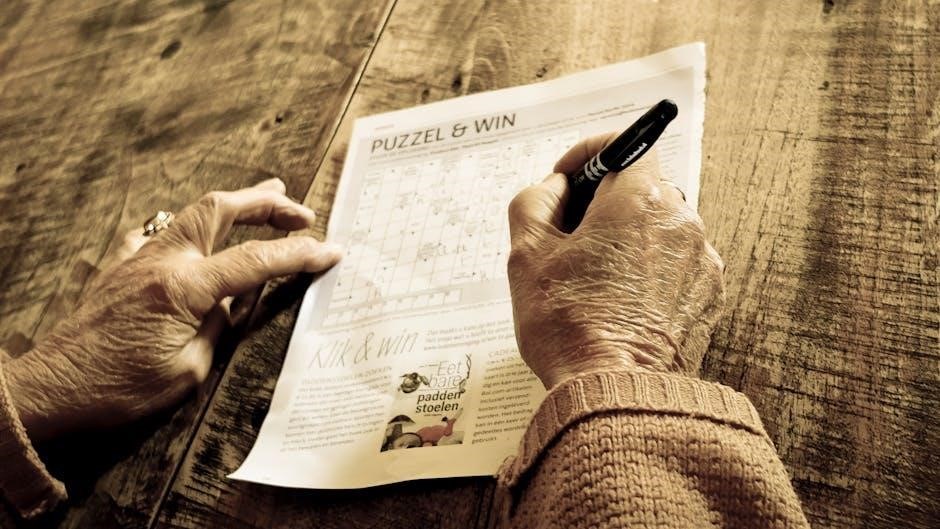
Despite the prevalence of digital entertainment, manual crossword solving is experiencing a notable resurgence in popularity. This trend appears to be a reaction against constant screen time and a desire for more mindful, tactile activities. Many find the physical act of writing in the grid, and the focused concentration it requires, to be incredibly relaxing and rewarding.
Furthermore, the challenge of solving without instant gratification – no hint buttons here! – appeals to those seeking a genuine mental workout. The sense of achievement derived from cracking a tough clue independently is far greater. This renewed interest is fueled by a growing appreciation for traditional hobbies and a yearning for disconnecting from the digital world, even for a short while.
Understanding the Clues
Mastering clues is key! Crossword clues require careful reading and interpretation, often employing wordplay, synonyms, and subtle hints to challenge solvers.
Types of Clues Found in Connected Manually Crosswords
Direct clues present straightforward definitions, requiring a simple recall of knowledge. Synonym clues ask for a word with a similar meaning, testing vocabulary breadth. Anagram clues scramble letters, demanding rearrangement to form the answer – a playful challenge! Hidden word clues conceal the answer within the clue’s text itself, requiring keen observation.
Container clues involve one word “containing” another, a clever construction. Reversal clues indicate the answer is a reversed spelling of a word or phrase. Homophone clues rely on words that sound alike but have different meanings, adding a layer of trickery. Finally, cryptic clues combine multiple techniques, demanding advanced solving skills and a knack for deciphering complex wordplay. Recognizing these types is crucial for efficient solving.
Decoding Ambiguous Clues
Ambiguity is a hallmark of challenging crosswords. Clues often employ multiple meanings of words, requiring solvers to consider various interpretations. Pay close attention to subtle indicators like tense and number – is the clue singular or plural? Context is key; consider potential answers based on intersecting letters already filled in.
Look for qualifying words that narrow down possibilities, such as “briefly” or “primarily.” Don’t fixate on the first idea that comes to mind; explore alternative meanings and synonyms. If a clue feels particularly vague, try writing down several potential answers and testing them against the crossings. Patience and a willingness to experiment are vital when tackling ambiguous clues.
Common Clue Structures & Techniques
Crossword clues aren’t random; they follow established patterns. Direct clues provide straightforward definitions, while indirect clues hint at the answer through synonyms or related concepts. Cryptic clues, a more advanced form, employ wordplay like anagrams, hidden words, and double meanings.
Recognizing these structures is crucial. Look for question marks indicating a playful or pun-based clue; Pay attention to abbreviations (e.g., “abbr.” for abbreviation) and foreign language terms. Familiarize yourself with common crosswordese – short, frequently used words like “ERE” or “OAST.” Mastering these techniques will significantly improve your solving speed and accuracy, unlocking even the most perplexing puzzles.
Strategies for Solving
Effective solving begins with tackling easier clues first. Utilize intersecting letters to confirm answers and build momentum, recognizing patterns for quicker progress.
Starting with Easy Clues
Embarking on a connected manually crossword should always begin with identifying and completing the most straightforward clues. These are typically general knowledge questions or fill-in-the-blanks that require minimal deduction. Successfully answering these initial clues provides a solid foundation of letters, creating crucial crossing points for more challenging entries.
Don’t hesitate to scan the entire puzzle before committing to any single answer. Look for clues with short answer lengths, as these often have fewer possibilities. Prioritizing these easier wins builds confidence and momentum, making the overall solving experience more enjoyable. Remember, a few confirmed letters can unlock a cascade of solutions throughout the grid, simplifying the process considerably.
Utilizing Crossings and Intersections
The interconnected nature of a connected manually crossword is your greatest asset. Once you’ve secured a few initial answers, meticulously examine the points where words intersect. These crossings provide invaluable confirmation – or contradiction – of your potential solutions. A correctly placed letter dramatically narrows down the possibilities for adjacent clues.
Focus on areas with multiple confirmed letters. If you suspect a word but are unsure, check if the intersecting letters align with clues you’ve already solved. Don’t be afraid to tentatively pencil in possibilities, constantly revisiting and refining them as you uncover more information. This iterative process, leveraging the grid’s structure, is key to unlocking even the most complex puzzles.
The Power of Pattern Recognition
Experienced crossword solvers develop a keen sense of pattern recognition. Pay attention to common letter combinations, frequently used prefixes and suffixes, and typical word lengths for specific clue types. Recognizing these patterns can significantly accelerate your solving process, especially in connected manually crosswords where the grid offers visual cues.
Notice recurring themes or categories within the clues. A cluster of clues relating to history, literature, or pop culture might indicate a particular focus for that section of the puzzle. Furthermore, observe the placement of shorter words – they often serve as connecting pieces, revealing crucial letters for longer, more challenging answers. Cultivating this observational skill is paramount to success.
Tools and Resources
Enhance your solving experience! Utilize online dictionaries, crossword puzzle apps, and vibrant community forums to unlock solutions and deepen your understanding.
Online Crossword Dictionaries and Solvers
Navigating the digital landscape for assistance is now easier than ever. Numerous online crossword dictionaries provide comprehensive lists of words, categorized by length, perfect for when you’re stuck on a tricky clue. These resources are invaluable for verifying potential answers and expanding your vocabulary. Beyond simple dictionaries, several websites offer dedicated crossword solvers.
These solvers allow you to input known letters and patterns, significantly narrowing down the possibilities. They can be particularly helpful when dealing with ambiguous clues or unfamiliar terminology. Remember to use these tools strategically – the true joy of crossword solving lies in the mental challenge, so avoid relying on them for every answer. Instead, view them as aids to overcome roadblocks and enhance your overall solving experience.
Crossword Puzzle Apps for Mobile Devices
The convenience of crossword solving now fits in your pocket! A plethora of mobile apps cater to crossword enthusiasts, offering a diverse range of puzzles and features. Many apps provide daily challenges, themed puzzles, and varying difficulty levels, ensuring there’s something for everyone. Interactive features, such as check-answer functionality and hint systems, can be incredibly useful, especially when tackling particularly challenging clues.
Furthermore, some apps allow you to track your progress, compete with friends, and even create your own custom puzzles. These apps often include built-in dictionaries and solvers, mirroring the functionality of online resources. Whether you’re commuting, waiting in line, or simply relaxing at home, mobile crossword apps provide a readily accessible and engaging mental workout.
The Role of Community Forums and Websites
Crossword solving isn’t a solitary pursuit! Online community forums and dedicated websites play a vital role in enhancing the experience for enthusiasts. These platforms offer a space to discuss challenging clues, share solving strategies, and collaborate on particularly difficult puzzles. Experienced solvers often contribute insights and explanations, helping others to understand complex clueing techniques.
Moreover, these communities frequently host puzzle creation contests and provide access to user-generated content. Websites often archive past puzzles, offering a vast library of challenges. Seeking assistance from fellow solvers can unlock breakthroughs and deepen your understanding of crossword construction. It’s a fantastic way to learn, connect with like-minded individuals, and elevate your solving skills.
Specific Clue Examples & Solutions
Let’s tackle some clues! Analyzing examples like “PS5-TV Connection Cable” and “Connect” reveals common crossword techniques and demonstrates how to decipher tricky wording.
Analyzing the Clue: “PS5-TV Connection Cable”
Deconstructing this clue requires a multi-faceted approach. Initially, identify the core components: a PlayStation 5 (PS5), a television (TV), and the connecting element – a cable. Consider the types of cables commonly used for this purpose. HDMI is the most prevalent, transmitting both high-definition video and audio.
However, don’t immediately settle on the obvious! Crossword clues often employ misdirection. Think about alternative, less common cable types, though HDMI remains the strongest possibility given the context. The length of the answer will also be a crucial factor, determined by the grid’s constraints.
Experienced solvers will mentally list potential answers, checking their letter counts against available crossings. This clue leans towards a relatively short, common word, making HDMI a highly probable solution.
Breaking Down the Clue: “Connect”
The deceptively simple clue “Connect” demands careful consideration. Its brevity suggests a common, short answer, but also opens the door to multiple interpretations. Think beyond the literal act of joining things physically. “Connect” can imply establishing a link, making an association, or even succeeding in reaching someone.
Consider synonyms: link, join, relate, associate, or even achieve. The crossword grid will provide vital clues. Existing letters will immediately narrow down possibilities. Is the answer a verb, a noun, or perhaps an adjective describing a connection?
Experienced solvers often look for wordplay. Could “Connect” be part of a phrase or idiom? The context of surrounding clues is invaluable. Don’t dismiss seemingly unrelated ideas – a fresh perspective might unlock the solution.
Exploring Similar Clue Types and Their Solutions
Clues mirroring “Connect” often rely on versatile verbs with multiple meanings; Consider “Link,” frequently answered with “CHAIN” or “NODE,” depending on context. “Join” can yield “UNITE,” “MERGE,” or even “CLUB,” highlighting the importance of grid intersections.
Synonym-based clues are prevalent. If “Connect” suggests association, look for answers like “RELATE,” “CORRELATE,” or “ALIGN.” Pay attention to tense; a past-tense clue demands a past-tense answer.
Abstract connections are common. A clue like “Establish contact” might lead to “REACH,” while “Form a bond” could be “WELT” or “ALLIANCE.” Successful solving hinges on recognizing these subtle shifts in phrasing and applying lateral thinking. Remember, crosswords thrive on ambiguity!
Advanced Techniques
Mastering anagrams, spoonerisms, and cryptic clues unlocks complex puzzles. A strong grasp of history, literature, and pop culture is also incredibly beneficial.
Working with Anagrams and Hidden Words
Anagrams frequently appear in connected manually crosswords, demanding a reshuffling of letters to reveal the answer. Recognizing this clue type is crucial; look for indicators like “mixed up” or “in disarray.” Practice rearranging letters mentally or using online anagram solvers to build speed and accuracy.
Hidden words are cleverly embedded within the clue itself! These require a keen eye to spot sequences of letters that form the answer. Clues might hint at this with phrases like “part of” or “contained within.” Carefully scan the clue, looking for potential words hidden in plain sight.
Successfully identifying and solving anagrams and hidden words significantly boosts your solving efficiency and unlocks more challenging puzzles. Don’t underestimate the power of these techniques!
Understanding Spoonerisms and Cryptic Clues
Spoonerisms, a playful type of error in speech, occasionally find their way into connected manually crosswords. These clues involve swapping the initial sounds of two words, creating a humorous and challenging puzzle element. Recognizing this pattern requires a flexible mind and an ear for linguistic quirks.
Cryptic clues represent a more advanced level of crossword solving. They employ layers of misdirection, including double meanings, hidden indicators, and complex wordplay. Deciphering these clues demands a thorough understanding of English grammar, vocabulary, and a willingness to think outside the box.
Mastering spoonerisms and cryptic clues elevates your crossword skills, allowing you to tackle even the most intricate puzzles with confidence and enjoyment. Practice is key to unlocking their secrets!
Using Knowledge of History, Literature, and Pop Culture
Connected manually crosswords frequently draw upon a vast reservoir of general knowledge. A strong foundation in history, literature, and pop culture is invaluable for cracking challenging clues. Expect references to historical figures, famous authors, iconic literary works, and current or past trends in music, film, and television.
Clues might allude to significant historical events, character names from classic novels, or popular song lyrics. Staying informed about these areas significantly expands your ability to deduce answers. Broaden your reading, explore documentaries, and keep abreast of current events to build this crucial knowledge base.
The more you know, the more connections you’ll make, transforming difficult puzzles into rewarding intellectual exercises.
The Benefits of Crossword Puzzles
Crossword puzzles provide cognitive enhancement, stress relief, and relaxation. They also expand vocabulary and general knowledge, offering a fantastic mental workout for all ages!
Cognitive Enhancement and Brain Training
Engaging with connected manually crosswords is a superb form of brain training, actively stimulating various cognitive functions. The process of recalling information, recognizing patterns, and problem-solving strengthens neural connections, improving memory and overall cognitive agility. Regularly tackling these puzzles can enhance critical thinking skills and boost mental sharpness.
Furthermore, the focused concentration required to decipher clues and fill in the grid promotes sustained attention and reduces mental fatigue. This mental exercise isn’t just about solving puzzles; it’s about maintaining a healthy and active mind, potentially delaying cognitive decline as we age. It’s a fun and rewarding way to keep your brain in top condition!
Stress Relief and Relaxation
Immersing yourself in a connected manually crossword provides a welcome escape from the pressures of daily life. The focused concentration required to solve the puzzle effectively shifts your attention away from anxieties and worries, promoting a state of calm and mindfulness. This dedicated mental activity can be incredibly therapeutic, offering a healthy outlet for stress.
Unlike many forms of entertainment, crossword solving doesn’t demand rapid reactions or constant stimulation. It allows for a slower, more deliberate pace, fostering a sense of tranquility. The satisfaction of completing a puzzle, even a small section, releases dopamine, contributing to feelings of accomplishment and well-being – a truly relaxing and rewarding experience.
Expanding Vocabulary and General Knowledge
Engaging with connected manually crosswords is a remarkably effective way to broaden your vocabulary and deepen your general knowledge base. The clues often require you to recall obscure facts, historical events, literary references, and even current pop culture trends. Successfully deciphering these clues introduces you to new words and concepts, subtly expanding your understanding of the world.
Furthermore, the process of searching for answers – whether through memory or external resources – reinforces learning and improves retention. Crosswords expose you to a diverse range of subjects, encouraging intellectual curiosity and a lifelong pursuit of knowledge. It’s a fun, engaging, and surprisingly educational pastime!
The Future of Connected Manually Crosswords
Technology impacts puzzle creation, yet the traditional appeal of manually solving crosswords persists, promising continued innovation and enjoyment for puzzle enthusiasts everywhere.
The Impact of Technology on Puzzle Creation
The digital age has profoundly altered crossword construction. Software now assists in grid creation, ensuring optimal symmetry and fill patterns, something previously done entirely by hand. Automated clue databases and algorithmic testing help constructors evaluate difficulty and fairness. However, this doesn’t diminish the human element; skilled constructors still craft clever and engaging clues.
Interestingly, technology also fuels a resurgence in manual solving. While online versions exist, many prefer the tactile experience of pen and paper. Digital tools can aid creation, but the core challenge – the mental workout – remains firmly rooted in traditional methods. The availability of online dictionaries and forums, while offering assistance, doesn’t replace the satisfaction of independent problem-solving.
Ultimately, technology and manual solving coexist. It’s a symbiotic relationship where innovation enhances, but doesn’t replace, the classic crossword experience.
Trends in Crossword Puzzle Design
Modern crossword design is evolving beyond traditional symmetrical grids. Increasingly, constructors are experimenting with asymmetrical layouts, offering a fresh challenge and allowing for more creative word arrangements. The inclusion of more diverse and contemporary cultural references is also notable, broadening the appeal to a wider audience.
There’s a growing emphasis on thematic puzzles, where answers revolve around a central concept or idea. These puzzles demand not only vocabulary knowledge but also an understanding of the chosen theme. Clue writing is becoming more sophisticated, employing subtle misdirection and wordplay to increase difficulty.
Despite these changes, the core principles of a good crossword remain: fairness, cleverness, and a satisfying solve. The enduring popularity of manually solved puzzles suggests a continued appreciation for the classic format, even as design innovations emerge.
The Continued Appeal of Traditional Puzzle Solving
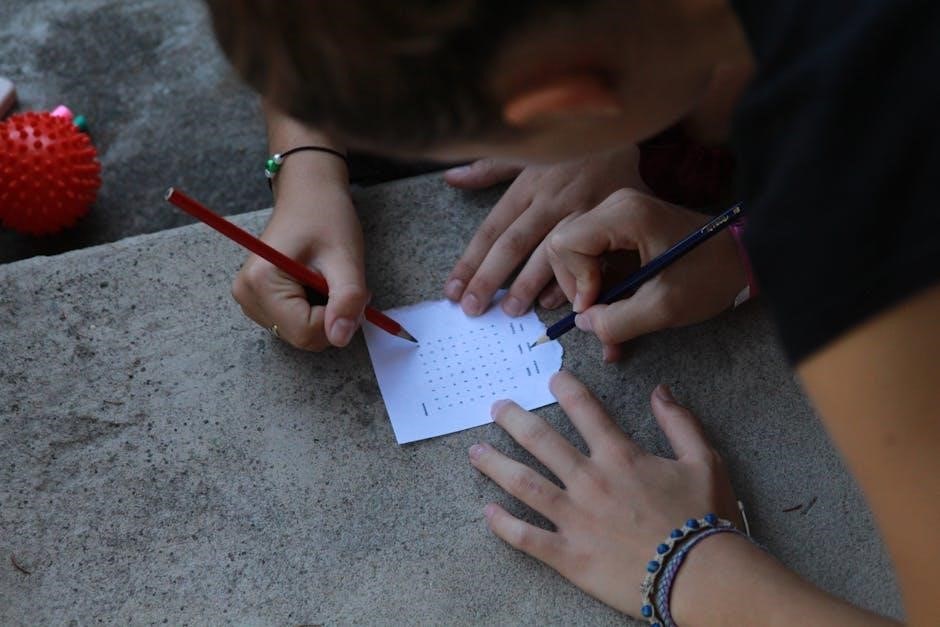
In a digital age, the enduring popularity of manually solved crosswords is a testament to their unique appeal. The tactile experience of pencil on paper, the focused concentration, and the sense of accomplishment are difficult to replicate with digital alternatives. Many solvers cherish the mindful break from screens and the opportunity for quiet contemplation.
Traditional crosswords offer a cognitive workout that’s both challenging and rewarding. They stimulate memory, enhance vocabulary, and improve problem-solving skills. The social aspect also plays a role, with many solvers enjoying collaborative solving or discussing puzzles with friends and family.
The inherent satisfaction of completing a puzzle through logic and knowledge remains a powerful draw, ensuring the continued relevance of this classic pastime for generations to come.